Real Work · Real Impact
Case Studies
by Sector
Six examples of measurable behaviour change, across policing, justice, energy, tech and media, the creative industries and higher education.
Why These Six
Different Sectors,
Same Method
Each case below is a real engagement. We anonymise client outcomes where confidentiality requires it, and quote published feedback where available. The pattern across sectors is consistent: change the format, change the result. See the full engagement walkthrough →
Public Sector · Policing
Case Study 01
Met Police Lewisham · The Innocence Project
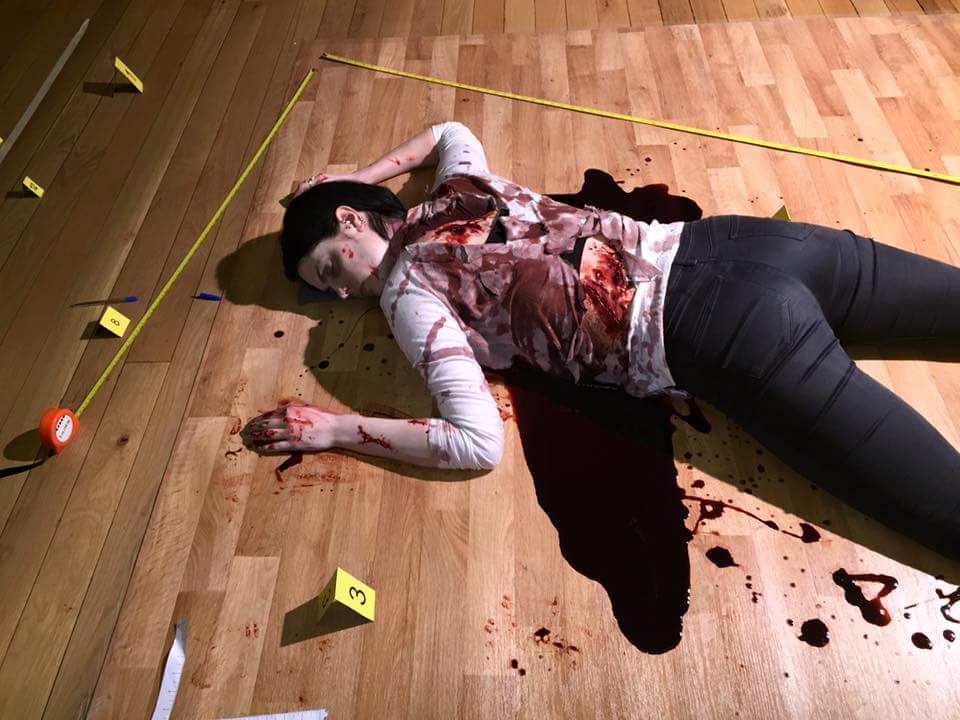
The Death of Jane Doe
The challenge: Police officers and frontline staff routinely encounter people in mental health crisis but receive limited training in how stigma and snap judgements distort their interventions. Standard awareness training was failing to shift on-the-job behaviour.
Sidestream Approach
Immersive crime-scene narrative built around a fictional victim with schizophrenia and antisocial personality disorder
Participants meet, and interrogate, actors playing real conditions, scripted with clinical advisors
Structured debrief targeting specific cognitive biases (anchoring, fundamental attribution error)
Recognised at the CorpComms Awards, recognised by judges for combining theatre and behavioural science to address mental health stigma at a level conventional training never reaches.
"When else can you have an honest talk with someone living with a serious mental health condition, except through immersive theatre?"Programme Participant
Legal · Justice
Case Study 02
A UK courts and tribunals service · Goldsmiths University
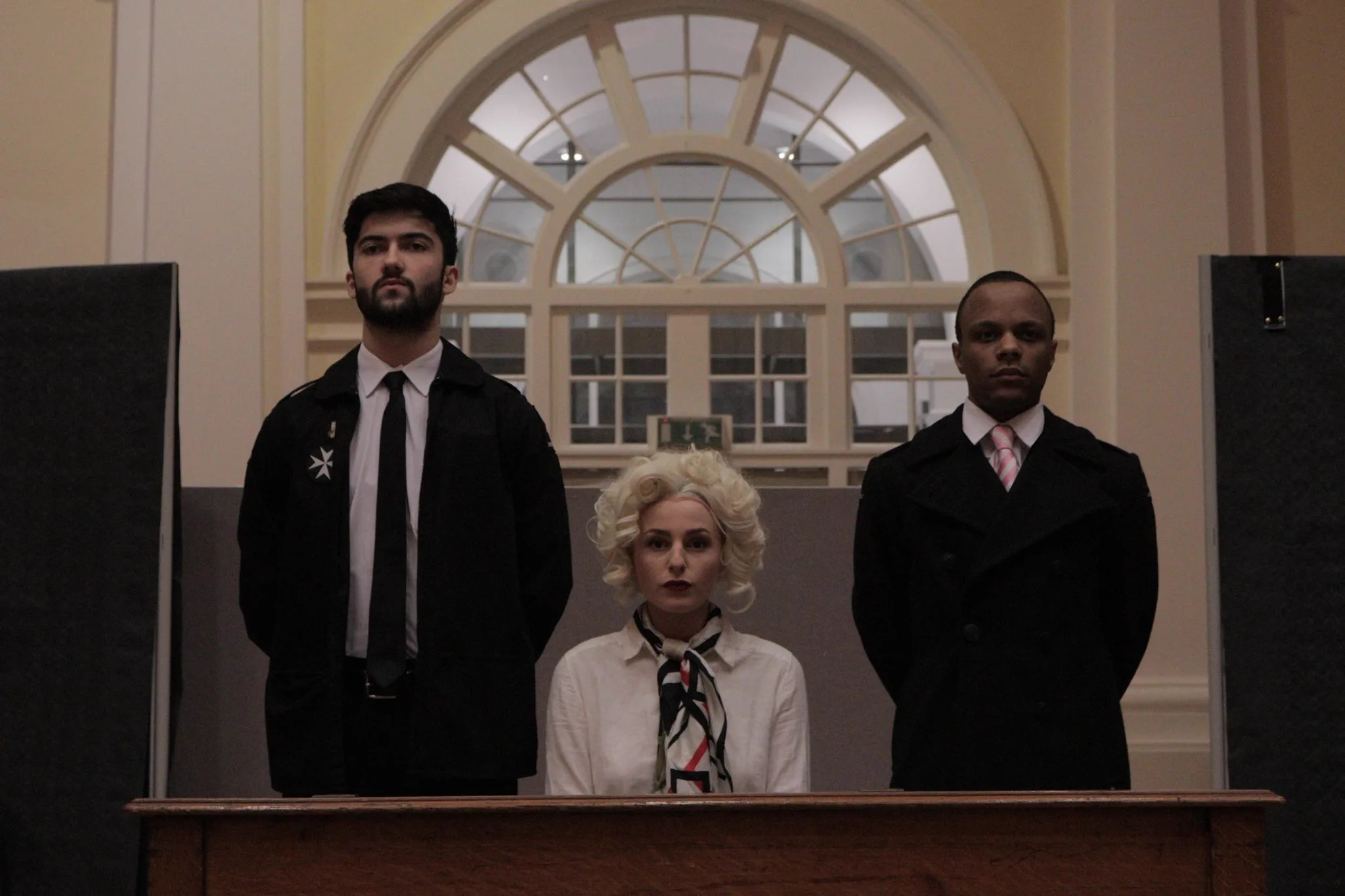
The Accused
The challenge: Decades of policy training has not removed gender bias from the legal system. Decision-makers, barristers, juries, HR leaders, still apply double standards under pressure, often without realising it.
Sidestream Approach
1950s courtroom reconstruction using real trial transcripts of Ruth Ellis, the last woman hanged in the UK
Participants serve as jurors, deliberate live, then watch the verdict play out
Behavioural debrief mapping their decisions back to real-world workplace bias patterns
600+
Participants reached across multiple iterations · commended at the Goldsmiths Public Engagement Awards 2018 · ongoing demand from public sector legal teams.
"A gripping and thought-provoking experience that made me reflect on how much, or how little, has changed for women in the workplace and beyond."Audience Member, The Accused
Energy · Utilities

Case Study 03
A UK nuclear site region · Energy Transition Stakeholders
The Nuclear Site Simulation
The challenge: Energy transition decisions involve regulators, nuclear experts, NGOs, investors and unions, each with conflicting incentives. Policy workshops fail because no one experiences the negotiation pressure or the consequences of getting it wrong.
Sidestream Approach
Week-long live simulation with participants assigned roles across the energy ecosystem
In-game currency (ISOTOPES) measuring influence and reputation in real time
Mid-week disruption: nuclear leak + political shake-up forcing rapid renegotiation
Multi-day
High-stakes diplomacy compressing months of stakeholder negotiation into a multi-day immersive, exposing alliance dynamics and strategy gaps no Excel model could surface. Team-level rehearsal of this kind runs as high-performance team training in London.
"The closest thing to real-world business diplomacy I've ever experienced."Programme Participant
Got a specific challenge in mind? A 30-minute call gives you a clearer answer than the website ever could.
Book a Free Call
Tech · Media

Case Study 04
Entertainment Sector Leadership Team
Future-Proofing
Entertainment
The challenge: Senior leaders in entertainment knew AI was coming, but couldn't agree on what regulation, talent development or commercial strategy looked like under five different futures. Disagreement was being misread as inertia.
Sidestream Approach
Multi-day scenario week with five plausible AI-regulation futures pre-built
Live-actor regulators, journalists and union reps disrupting the leadership team's plans in each scenario
Cross-scenario synthesis identifying robust strategies vs. bets that only work in one future
5 futures
Stress-tested in days, not quarters, turning abstract AI anxiety into concrete decisions the executive team could rally around.
"It compressed three years of board debate into one week, and we came out aligned for the first time."Senior Leader, Entertainment
Creative · Scale-ups

Case Study 05
London-Based Creative Startup
MARVELous Ideas
The challenge: A scale-up team had to pitch a Marvel-series concept to a major studio, but their pitches kept dying in the room. Investor feedback was polite. Their founders couldn't see why.
Sidestream Approach
"Pitch and tear-down" workshop with professional actors playing sceptical studio executives
Real-time behavioural feedback on body language, framing, persuasion patterns
Iterative rounds where each pitch is rebuilt and re-tested against the same actor-panel
3 rounds
To a confident, investor-ready pitch, and a repeatable framework for every future fundraise. The team now run their own pitch-rehearsal ritual internally. The format is available as innovation training in London.
"We finally heard what investors weren't telling us. The actors were brutal, and that's exactly what we needed."Co-Founder, London Scale-up
Higher Education · Leadership
Case Study 06
Goldsmiths · UCL · Cross-Sector Leaders
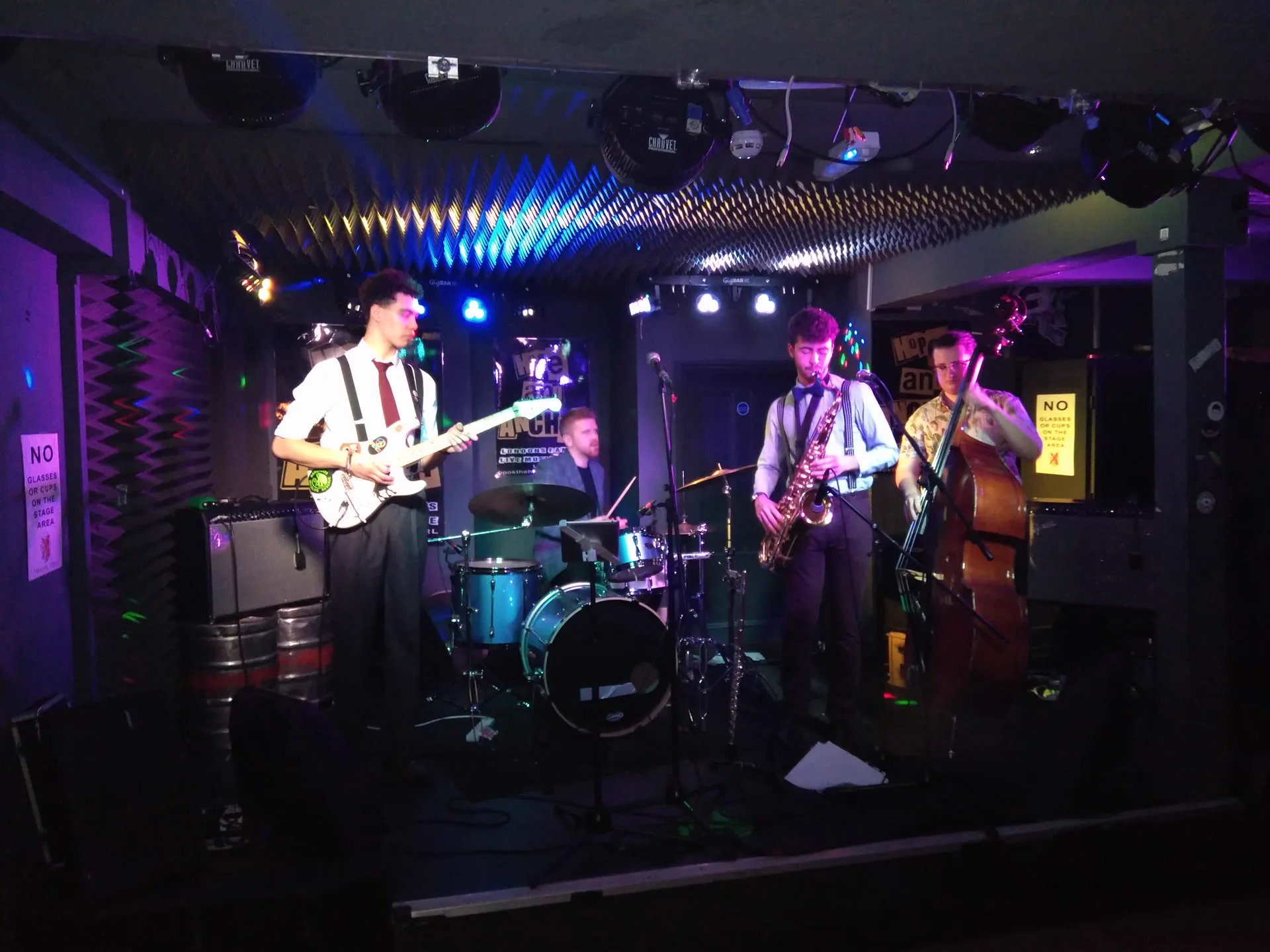
Top of the Cops
The challenge: Mid-career leaders rarely get to practise crisis management with anything at stake. Tabletop exercises are sanitised; real crises are too late to learn from. The gap costs organisations dearly when it matters.
Sidestream Approach
Live 1980s underground punk gig with real bands, rival factions and an eco-protest brewing
Participants step into rotating leadership roles as the night escalates
Decisions tracked: ethics, reputation, control under pressure, debriefed against published crisis-leadership models
100%
Of cohorts requested follow-up · participants describe it as the most memorable leadership intervention of their career.
"An 80s punk gig as a masterclass in leadership and reputation management? Pure genius."Cohort Participant, Top of the Cops
See It in Action
Five Minutes Inside
an Immersive Session
Reading about behaviour change and seeing it are different things. The clip captures an actual Sidestream debrief, actors holding character, participants visibly shifting, the moment the room realises the lesson is about them.
"The judges loved the creative approach to building awareness, well executed and an excellent mix of theatre and immersive work."
Helen Dunne, CorpComms Awards Panel"When else can you have an honest talk with someone living with a serious mental health condition, except through immersive theatre?"
Programme Participant, The Death of Jane DoeSample clip · click to play
How an Engagement Runs
The Optimal Workflow
Inside Your Organisation
Six phases, one outcome. Behaviour is measured three to six weeks after delivery and again at around 90 days.
Sidestream's own method description, not a research finding. Each phase in detail.
Most consultancies show you their process. Below is the other side: what an optimal Sidestream engagement looks like from inside your calendar, what we do, what we need from you, and what your team is doing during each phase.
0
Week 0 · Discovery
Sponsor Alignment & Free Diagnostic Call
A 30-minute call to understand the people problem in your own words. We tell you honestly whether we are the right fit before any cost is incurred.
What Sidestream Does
- Listens to the problem in your words
- Shares relevant case-study patterns
- Confirms fit, or refers you elsewhere
What You Need to Have Ready
- The executive sponsor & budget envelope
- A rough cohort size & level (manager / leader / exec)
- Any failed previous interventions to learn from
1
Weeks 1 to 3 · Diagnostic
Consulting & Baseline
We measure what's really happening, so you have a benchmark to compare against later. This is what separates a Sidestream engagement from a one-off workshop.
What Sidestream Does
- Validated psychometric tools (e.g. team psychological-safety index)
- 1:1 leader interviews (45 min each)
- Two structured focus groups across levels
- Baseline report mapped to COM-B targets
What Your Team Does
- Nominates 4–6 leaders for interviews
- Distributes the survey link & nudges completion
- Briefs participants on confidentiality
- Identifies any sensitive topics to handle carefully
2
Weeks 4 to 7 · Design & Production
Bespoke Scenario Build
We build the immersive intervention. Your team has light-touch involvement here, but two key alignments matter.
What Sidestream Does
- Drafts narrative, character dossiers, facilitation plan
- Casts professional actors from our trained ensemble
- several internal QA simulations to test pacing and logic (indicative)
- Produces all materials, props & on-screen media
What Your Team Does
- Reviews narrative for sector authenticity (1 hr)
- Confirms venue, catering & AV requirements
- Decides the communication strategy: blind cohort or briefed?
- Issues calendar invites with the agreed framing
3
Delivery Week
On-Site Immersive Experience
The day participants will still be talking about. We arrive a day early for full dress rehearsal, non-negotiable for production quality.
What Sidestream Does
- Full on-site dress rehearsal day
- 3–4 hour live immersive experience
- Structured debrief with COM-B-mapped reflection
- Co-facilitator support for complex cohorts
What Your Team Does
- Hosts space and looks after logistics
- Ensures sponsor presence at debrief (critical signal)
- Captures own observations for post-event review
- Releases manager toolkit ahead of week 9
4
Weeks 9 to 16 · Embedding
Manager Booster & Behavioural Rituals
Without reinforcement, behaviour change dies in week 4 after delivery. This is where most consultancies leave you, and where we stay.
What Sidestream Does
- Two virtual booster sessions (60 min each)
- Manager toolkit walkthroughs
- Helpline access for difficult applications
What Your Team Does
- Line managers run weekly 15-min behavioural rituals
- HR captures qualitative shifts in 1:1s
- Sponsor reinforces at all-hands or town halls
5
3 to 6 weeks and around 90 days after delivery · Measure & Scale
Post-Intervention Audit & Wave 2
We re-measure against the baseline three to six weeks after delivery and again at around 90 days. The number you cared about in week 0 is the number we report on.
What Sidestream Does
- Re-runs validated baseline measures
- Delivers behaviour-change impact report to sponsor
- Recommends Wave 2 cohorts or programme extension
What Your Team Does
- Co-presents results to executive leadership
- Decides scaling: which cohorts go through Wave 2
- Embeds the programme into onboarding / promotion criteria
Behaviour Change Case Studies in Brief
These six case studies show the same Sidestream method working across very different sectors, from policing and justice to energy, tech, creative scale-ups and leadership. Each is a real engagement, anonymised where confidentiality requires it and quoting published feedback where it exists. The pattern holds across every behaviour change case study here: change the format and you change the result.
- Award-recognised work includes The Death of Jane Doe (recognised at the CorpComms Awards) and The Accused (commended at the Goldsmiths Public Engagement Awards 2018).
- Formats range from immersive crime-scene narratives to week-long multi-stakeholder simulations and pitch tear-downs.
- Each case pairs lived experience with a structured debrief mapped to specific behaviours.
- The engagement timeline runs from a free diagnostic call through baseline, build, delivery, embedding and re-measurement.
Case Studies
Your Sector Next?
Let's Build
Your Case Study
If your sector isn't shown above, that's because we haven't worked with you yet. Most case studies start with a 30-minute call.