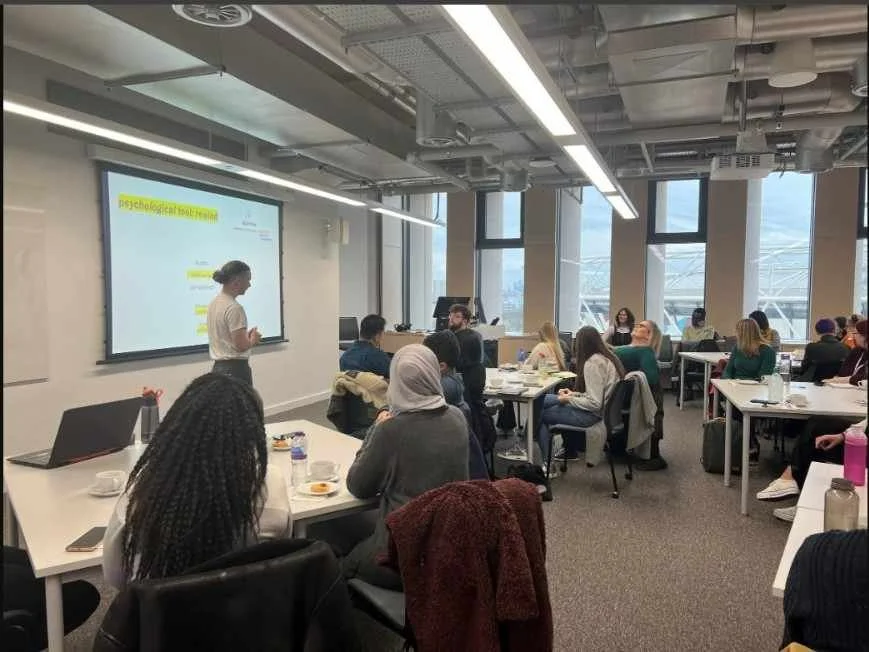
Senior public sector leadership is unusually exposed. The decisions are consequential, the scrutiny is constant, and the leader is often expected to hold a steady presence while operating under political pressure, resource constraint and public attention all at once. These are not things a leader can be told how to do, they have to be felt and practised. And yet much senior development in government still relies on passive formats: a lecture on leadership, a competency framework, a reading list. The evidence is clear, those formats rarely change behaviour. Sidestream's public sector executive coaching is built differently, combining genuine coaching and mentoring with immersive rehearsal of the moments that actually test a senior leader.
This page is the working reference for permanent secretaries, directors general, Senior Civil Service sponsors, chief officers, NHS and local-government leaders, senior police officers and the heads of talent who scope coaching for them.
What Public Sector Executive Coaching Is
Public sector executive coaching is structured, confidential, one-to-one development for senior leaders working in the civil service, central and local government, the wider public sector and policing. It is a thinking partnership focused on how the leader leads: the judgement they bring to hard decisions, the presence they hold in front of staff and stakeholders, the emotional intelligence they use to read a room and regulate themselves, and the way they carry people through change.
It is distinct from generic executive coaching in one important respect: context. A senior public sector leader operates at the interface between the operational and the political, accountable to ministers or members, to the public, to regulators and to their own workforce at the same time. Coaching that ignores this reality stays abstract. Sidestream's coaching is calibrated for the specific pressures of public service, drawing on direct experience of senior policing and public-sector development, including the work behind our Westminster and Whitehall leadership programmes and our police leadership training.
Coaching and Mentoring: The Difference, and Why You Want Both
The two terms are often used interchangeably, but they describe different things. Coaching is non-directive. The coach does not supply answers; they use structured questions and reflection, often through a recognised framework such as the GROW model, to help the leader reach their own clarity and commit to action. Mentoring is more directive: an experienced practitioner shares relevant experience, offers guidance and shortens the leader's learning curve by passing on what they have seen work.
Senior public sector leaders usually benefit from both, at different moments. A leader wrestling with how they show up under challenge needs coaching to surface their own pattern. A leader facing an unfamiliar accountability structure for the first time may need a mentor who has stood in that exact place. Sidestream blends the two deliberately, and then adds the element most coaching leaves out: rehearsal. We explain the distinction in full in our guide to the difference between coaching and mentoring.
The Five Capabilities Senior Public Sector Coaching Develops
Across our public sector coaching, five capabilities come up again and again. They map closely onto the long-established model of emotional intelligence, and they are exactly the capabilities that distinguish a senior leader who steadies an organisation from one who unsettles it.
One: leadership presence. How a leader occupies a room, holds attention under pressure and signals composure when the situation is difficult. Presence is felt by others before a word is said, and it is built through practice, not theory.
Two: emotional intelligence. The self-awareness to notice one's own state, the self-regulation to manage it, and the empathy to read and respond to others. For a fuller treatment, see our companion guide to what emotional intelligence in leadership means.
Three: decision-making under pressure. Structured judgement when information is incomplete, time is short and the consequences are public. Coaching helps a leader notice their own biases and decision habits, and rehearsal lets them test better ones.
Four: leading people through change. The behaviour that carries a workforce through reform, restructuring or sustained uncertainty: clear communication, visible integrity and the ability to absorb anxiety without passing it on.
Five: difficult conversations and challenge. Holding honest conversations with peers, staff and stakeholders, and receiving challenge without defensiveness. This is where presence, emotional intelligence and judgement meet in a single moment.
Scope a coaching programme
Book a free 30-minute consultation. Bring the leader, the role and the behavioural goal.
Book a Free ConsultationHow Sidestream Blends Coaching With Immersive Rehearsal
Some things cannot be taught, they have to be felt. A leader can understand, in a coaching conversation, exactly how they want to handle a hostile select-committee session, a difficult all-staff message or a confrontation with a senior peer. Understanding it is not the same as being able to do it when the moment is real and the adrenaline is up. This is the gap that conventional coaching leaves open, and it is the gap Sidestream closes.
We pair the coaching conversation with immersive rehearsal. Professional actors play the realistic stakeholder roles a senior leader faces: the sceptical journalist, the angry union representative, the disengaged direct report, the challenging committee member. The leader practises the conversation, gets honest feedback, and practises it again, until the intended behaviour holds under pressure. Because real behaviour change happens through lived experience, the rehearsal is what makes the coaching stick. Our wider method, and the academic behaviour-change work from UCL, Cambridge and Bocconi that underpins it, is set out across our executive training and coaching skills training pages.
Coaching for Talent and Succession in Government and Policing
Coaching is not only for leaders already in post. Some of its highest value is in building the behavioural readiness that succession planning depends on. Public sector and policing organisations invest heavily in identifying high-potential leaders, then too often promote them and hope. Coaching changes that. By developing self-awareness, emotional intelligence, decision-making and presence in advance of the next role, it helps a successor arrive ready rather than learning under fire in full public view.
Sidestream supports talent and succession by combining individual coaching with immersive rehearsal of the situations the future role will demand, so readiness becomes observable rather than assumed. A leader being prepared for a director-general post, or an officer being prepared for chief-officer rank, can rehearse the harder demands of that role before they hold it. This is how a credible succession pipeline is built: not on a list of names, but on demonstrated behaviour.
How Sidestream Measures Coaching Outcomes
Coaching that cannot be evidenced is hard to defend to a public-sector finance lead, and rightly so. Sidestream measures coaching at Kirkpatrick Level 3: observed behaviour in real work, not satisfaction alone. Goals are agreed at the outset with the leader and, where appropriate, their sponsor. Progress is then reviewed against observed behaviour, how the leader chairs a meeting, handles challenge, communicates through change and decides under pressure, rather than against how enjoyable the sessions were. Where the brief allows, Level 4 organisational indicators are added. Our broader thinking on this is in our guide to measuring behaviour change.
Formats
Coaching engagements are shaped around the leader and the brief rather than sold as fixed packages. Common formats include a focused individual coaching programme over several months, a blended coaching-and-mentoring engagement, coaching combined with immersive rehearsal for a specific high-stakes situation, cohort coaching for a senior leadership team alongside team rehearsal, and succession-focused coaching for high-potential leaders preparing for promotion. Every format is priced per engagement, because scope and depth vary with the context.
How to Begin
Book a free 30-minute consultation at calendly.com/info-sidestream. Bring the leader or cohort, the role they hold or are heading towards, and the behavioural goal. We will tell you honestly whether coaching, mentoring, immersive rehearsal or a combination is the right fit, or whether another form of development would serve your context better. Get in touch today. We are Sidestream.
Frequently Asked Questions
What is public sector executive coaching?
Structured, confidential one-to-one development for senior leaders in the civil service, government, the wider public sector and policing. It works on presence, emotional intelligence, decision-making and leading people through change, and Sidestream combines it with immersive rehearsal so insight becomes observable behaviour.
How is coaching different from mentoring?
Coaching is non-directive and helps a leader find their own way forward, often through a model such as GROW. Mentoring is directive and shares relevant experience. Senior public sector leaders usually benefit from both, and Sidestream blends them, then adds rehearsal.
Who is it for?
Senior leaders across the civil service and government, including Senior Civil Service grades, directors and directors general, agency leaders, local-authority chief officers, NHS senior leaders and senior police officers. It is also used to prepare high-potential leaders for their next role.
How does coaching support talent and succession?
By building behavioural readiness ahead of promotion. Developing self-awareness, emotional intelligence, decision-making and presence in advance, then rehearsing the situations the future role demands, helps a successor arrive ready rather than learning under fire.
How are outcomes measured?
At Kirkpatrick Level 3, observed behaviour in real work, against goals agreed at the outset with the leader and sponsor. Where the brief allows, Level 4 organisational indicators are added.
Public Sector Executive Coaching: The Short Version
Public sector executive coaching is structured one-to-one development for senior leaders in the civil service, government and policing. It builds presence, emotional intelligence, decision-making and the ability to lead people through change. Sidestream blends coaching and mentoring with immersive rehearsal so insight is practised under pressure and becomes observable behaviour, and everything is measured at Kirkpatrick Level 3 and priced per engagement.
- Coaching is non-directive and mentoring is directive; senior leaders benefit from both, plus rehearsal.
- Five capabilities developed: presence, emotional intelligence, decision-making, leading through change, and difficult conversations.
- Coaching builds the behavioural readiness that talent and succession in government and policing depend on.
- Outcomes are measured as observed behaviour in real work, not satisfaction alone.