Who this page is for
- Financial services
- NHS
- Police
- Universities
- Energy
Most workplace training delivers content: slides, videos, e-learning modules, instructor-led sessions and a satisfaction survey at the end. That has its place, mostly for passing on knowledge at scale. It rarely changes behaviour you can see. The reason is well documented in behaviour-change research: knowing what to do is not the same as being able to do it. To build a skill, people need rehearsal with feedback at the edge of what they can already do (Ericsson 2016).
Immersive simulation is the practical method that meets this need, and at Sidestream it is the core of what we do. This page is a working reference for HR Directors, Heads of L&D, CHROs and senior managers who are scoping immersive simulation in London. Alongside the scripted scenes, real play lets a participant rehearse a conversation of their own; see real play vs role play.
The guide runs to roughly 5,500 words.
What Immersive Simulation Is
Immersive simulation uses scripted scenes, played by professional actors, so that people can rehearse specific workplace behaviours and decisions in a safe place to learn. The method has its roots in the immersive theatre tradition, combined with experiential learning theory and research in organisational psychology.
In practice, an immersive simulation looks like this. A cohort gathers in a workshop room. The facilitator briefly sets out the aim of the workshop and the behaviour it targets. The scene opens. Professional actors play the colleagues, clients, stakeholders or other roles the rehearsal needs. One participant takes the lead role, in a scripted situation drawn from the team's real working life.
The scene unfolds. The participant has to make the decisions and have the conversations the role requires. The facilitator may pause at moments where a behaviour can be observed, or let the scene run to its natural end before the debrief.
The structured debrief picks out the specific behaviours that were observed and names them. It links them to the wider context of the team's working life. Then the scene is rehearsed again, with the learning built in. The cycle goes on, with different people in different scenes, until the rehearsal time is up. A final round pins down the specific behaviour each participant commits to taking forward.
The method differs from conventional training in concrete ways. The room is not a corporate training room with rows of seats. The activity is not a slide deck, and it is not role-play between peers. The actors are not facilitators in role. They are professional actors playing characters in the cultural register the cohort will meet in real life. The output is not a satisfaction survey. It is behaviour change you can observe, with structured follow-through.
The Five Reasons Immersive Simulation Produces Stronger Learning Outcomes
Five reasons from the research on experiential learning explain why we build on immersive simulation rather than conventional training.
Reason 1: bespoke scenarios produce contextual transfer. Scenarios are written for the cohort and drawn from the team's real working life. They carry over into real work in a way that generic case studies do not. The cohort recognises the scene, commits to the rehearsal and takes the learning back to the job.
Reason 2: professional actors produce rehearsal realism. Rehearsing with professional actors is different from role-play between peers, where colleagues are sympathetic and similar in role to the participant. Because the actors respond as real people would, participants show their real patterns of behaviour, not a performance for the room.
Reason 3: iteration cycles produce deliberate practice. The cycle of rehearse, debrief and rehearse again puts Ericsson's deliberate practice framework into practice. Each round builds a little more skill. After each debrief, the same scene runs again with the learning built in.
Reason 4: active retrieval produces retention. Roediger and Karpicke's 2006 research in Psychological Science established that active retrieval produces around 50% better long-term retention than passive re-reading. Immersive simulation applies active retrieval to behaviour: each rehearsal is the step that makes the learning stick.
Reason 5: Kirkpatrick Level 3 measurement produces accountability. The structured embedding and the Kirkpatrick Level 3 measurement create a kind of accountability that conventional training rarely has. The measurement is what sets immersive simulation outcomes apart from training that only checks satisfaction.

Sidestream's Distinctive Approach to Immersive Simulation
Sidestream's approach to immersive simulation differs from other immersive providers in three concrete ways.
The professional actor ensemble. Sidestream draws its actor ensemble from Camden's deep pool of creative-industry talent. We cast for the cultural register each cohort will face.
- City actors with a feel for financial-services culture, for City of London cohorts
- actors with clinical experience, for NHS cohorts
- actors in an academic register, for university cohorts
- actors in the register of operational policing, for police cohorts
- actors in a ministerial register, for Whitehall cohorts
The productions. The Death of Jane Doe, Sidestream's CorpComms-recognised immersive theatre production, addresses mental health stigma. It was developed with Met Police Lewisham and the Innocence Project as a crime-scene narrative for police officers and frontline staff.
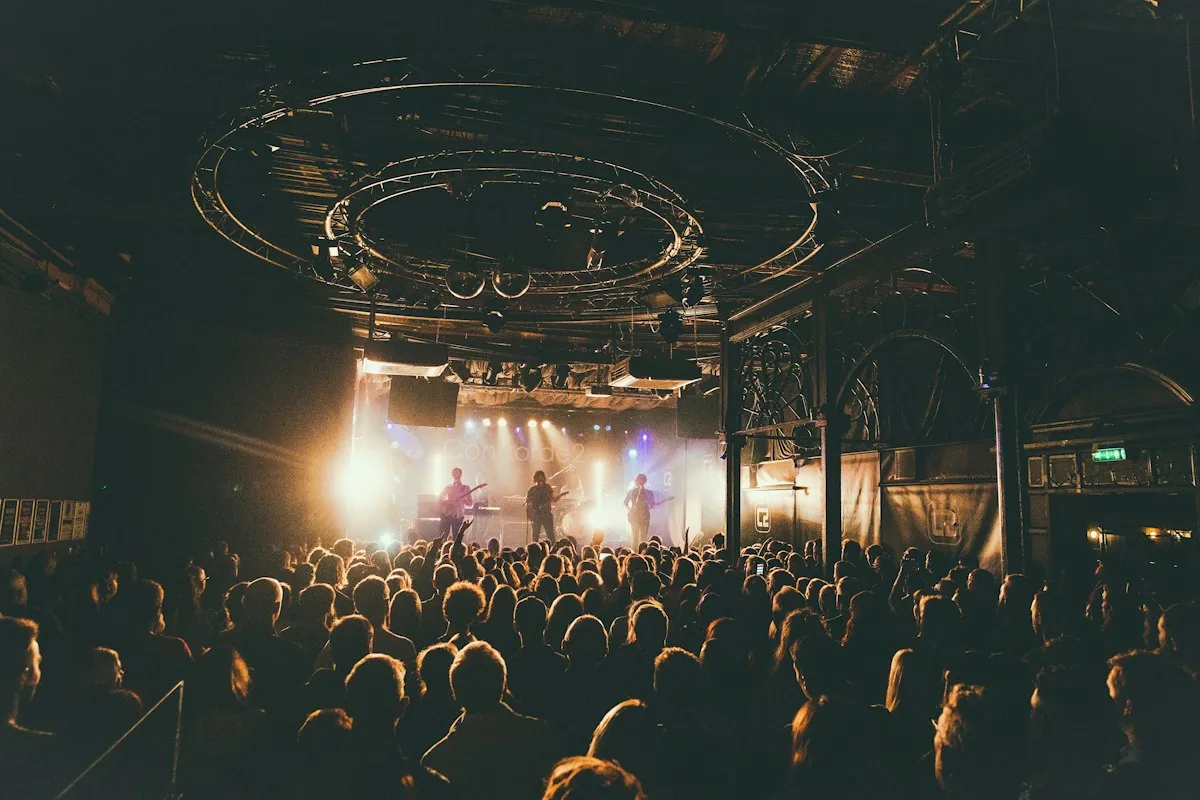
The Accused, commended at the Goldsmiths Public Engagement Awards 2018, addresses gender bias in the legal system. It rebuilds a 1950s courtroom, and the participants serve as the jury. Top of the Cops is the leadership and reputation management programme. It uses an 80s punk gig as the setting for a masterclass in leading under pressure.
The academic anchor. The method draws on published research on experiential learning (Kolb), deliberate practice (Ericsson) and retrieval practice (Roediger and Karpicke). Co-founder Ben Laumann is engaged in doctoral research in management and organisational behaviour at Bocconi, with research roots at UCL, Cambridge and Bocconi. The method holds up in theory. That matters to sceptical buyers, and in procurement, where questioning the evidence base is part of buying.
Scope an immersive simulation programme
Book a free 30-minute consultation. Bring the specific behavioural target you want to rehearse.
Book a Free ConsultationThe Behavioural Targets Immersive Simulation Can Rehearse
Any behaviour that happens in a conversation, or in decisions others can observe, can be rehearsed through immersive simulation. The list of uses is long. This section covers the main ones.
Speak-Up Culture and Disclosure-Response Targets
The first is the speak-up moment. A colleague sees inappropriate, unsafe or unethical practice and decides what to do, with the political and professional costs of stepping in in plain view. The second is the moment of disclosure. A colleague or service user reports harassment, a mental-health concern, a safety concern or other significant information, and it needs a structured response. Both can be rehearsed through immersive simulation.
Harassment Intervention and Worker Protection Act Compliance
The Worker Protection Act's reasonable steps duty has applied since October 2024. It has put bystander intervention at the centre of demand for compliance L&D. The behaviour it requires can be observed at the moment someone steps in. Bespoke harassment-intervention workshops rehearse exactly this.
Difficult Performance and Change Conversations
The talk with a colleague whose performance has slipped. The talk about restructuring with the team members it affects. The talk about AI adoption and role redesign. The redundancy talk. The talk about integration after a merger. Each can be rehearsed through immersive simulation, with professional actors playing the colleagues being addressed.
Leadership-Under-Pressure Targets
Command in a critical incident. Leading through an operational crisis. Leading in front of a regulator's inquiry. Leading while the media are watching. Top of the Cops rehearses leadership under reputational pressure, with a realism that conventional leadership training rarely matches.
Conduct-and-Culture and Regulatory-Supervised Conversations
The FCA-supervised conversation in financial services. The CQC well-led evidence session in the NHS. Engaging the Office for Students in higher education, HMICFRS in policing and the SRA in legal practice. All can be rehearsed through immersive simulation, with professional actors playing the regulator and oversight roles.
Decision-Making Under Pressure Targets
Time-pressured decisions in operations. Structured peer challenge in deal or investment meetings. Strategic decisions at board level under pressure from stakeholders. Clinical decisions where time is critical. The skills these need can be rehearsed with scripted scenes drawn from real decisions.
Client and Stakeholder Engagement Targets
Pitching to a client. Engaging stakeholders during change. Structured consultation with service users or community members. Coordinating with partner agencies. Each can be rehearsed this way, with professional actors playing the client, stakeholder or partner. Board and investor presentations are covered in our presentation skills training, with actors playing that audience.
Cross-Cultural and EDI-Integration Targets
Building equality, diversity and inclusion into everyday operational decisions. Responding when someone discloses discrimination. The moment a bystander steps in. Acting as an ally when bias shows. Each can be rehearsed this way. The Accused, which examines gender bias in the legal system, covers one strand of this area.
Sector Application Notes for Immersive Simulation Training
Financial Services Immersive Simulation
For financial services cohorts in the City of London and Canary Wharf, immersive simulation suits the following work.
- conduct-and-culture training
- rehearsing FCA-supervised conversations
- harassment-intervention workshops after the Worker Protection Act
- structured peer-challenge programmes for partners and directors
- developing senior leaders under pressure
See our City of London guide and Canary Wharf guide.
Public Sector Immersive Simulation
For UK Civil Service, NHS, local authority and police cohorts, immersive simulation suits the following work.
- speak-up culture
- developing compassionate leadership
- building EDI into everyday behaviour
- rehearsing critical-incident command
- rehearsing ministerial briefings
- preparing for CQC well-led reviews
- leading partnership working
See our Westminster and Whitehall guide, Police Leadership Training guide and NHS Behaviour Change guide.
Higher Education Immersive Simulation
For UK university cohorts, immersive simulation suits the following work.
- developing academic leadership
- training in how to respond to sexual misconduct
- building EDI into everyday behaviour
- developing conversations about decolonisation
- rehearsing decisions on freedom of speech
- leading research supervision
See our University Leadership Development guide.
Professional Services Immersive Simulation
For cohorts in Magic Circle law, Big-4 accounting and nearby professional services, immersive simulation suits the following work.
- peer challenge at partner level
- difficult performance conversations with high-revenue producers
- rehearsing client pitches
- conduct-and-culture programmes
- developing structured challenge
Technology Sector Immersive Simulation
For cohorts in Kings Cross, Shoreditch and other London tech clusters, immersive simulation suits the following work.
- rehearsing conversations about AI adoption
- developing leaders at the scaling stage
- programmes for hybrid teams
- the move from founder to CEO
- code-of-conduct compliance in product and engineering teams
Creative Industries Immersive Simulation
For cohorts in Camden, Soho and the creative industries, immersive simulation suits the following work.
- psychological safety in creative collaboration
- speak-up culture programmes after MeToo
- the move from founder-led to managed firm
- building equality and inclusion into everyday behaviour
Format Options for Immersive Simulation Training
The specifics change with every brief. Priced per engagement.
Sidestream's own method description, not a research finding.
Sidestream offers four distinct immersive simulation formats.
Format one: workshop format. A half-day or one-day workshop for 12 to 25 participants, with scripted scenarios, professional actors and structured embedding. This is the standard format for most briefs about behaviour. Priced per engagement.
Format two: multi-cohort programme. 4 to 8 cohorts of 12 to 25, run in sequence for one organisation. It suits organisation-wide briefs about behaviour. Priced per engagement.
Format three: production-format performance. A full immersive theatre production for larger audiences of up to 300. The Death of Jane Doe, The Accused and Top of the Cops are the established productions. They suit annual conferences, all-hands events, major workforce communications and high-profile moments in an organisation's development. Cost quoted per engagement.
Format four: enterprise programme. A programme across several cohorts and several years. It combines the workshop format, the production format and an embedded structure for building behaviour. It suits organisations that have made immersive method their central L&D approach. Priced per engagement.
Documented case: a simulation that ran live for a week. Sidestream built The Nuclear Site Simulation for a UK nuclear site region and energy transition stakeholders. Participants took roles across the energy ecosystem, with an in-game currency for influence and reputation. A mid-week disruption, a nuclear leak and a political shake-up, forced a rapid renegotiation. One programme participant called it "The closest thing to real-world business diplomacy I've ever experienced." Read the case study.
How Sidestream's Immersive Simulation Compares to Other Methods
Compared to traditional role-play in conventional training. In traditional role-play, cohort members play roles for each other. The realism is limited, because peers are sympathetic and similar to the rest of the cohort. Immersive simulation uses professional actors, trained in immersive-theatre method, to play the roles the cohort will actually face. That difference in realism produces materially different learning.
Compared to virtual-reality simulation training. VR simulation has emerged as another immersive method, especially for technical skills and for exposure to specific physical settings. Where the brief needs a physical setting (an operating theatre, a control room, a manufacturing line), VR can work well. Where the brief needs rehearsal of conversations and decisions, we use simulation with professional actors. The learning there comes from the dynamic between people.
Compared to AI-powered simulation training. AI-powered simulation is a new category, and several providers offer rehearsal with a chatbot. The technology can give useful exposure to specific conversation patterns. In our assessment, as of 2026 the gap in realism to simulation with professional actors is still material, especially for emotionally complex scenes; published evidence on AI conversation partners is still early. AI simulation suits basic skills at scale. Simulation with professional actors suits the specific behaviour change that justifies the higher cost.
Compared to case-method teaching. Case-method teaching was refined at Harvard Business School and adopted across the business-school market. It builds strong thinking about management situations. Its effect on behaviour is indirect by design: the student reads, analyses and discusses the case, but does not rehearse the behaviour it describes. Immersive simulation closes this gap by rehearsing the behaviour directly.
Compared to behaviour-modelling training. Behaviour-modelling training shows ideal behaviour through video or live demonstration. It can make people usefully aware of the target behaviour. But it builds little skill, because awareness is not skill. Immersive simulation builds both awareness and rehearsed skill.
For a full comparison, see our 50-provider UK comparison guide. For deeper analysis, see our immersive learning platform topic guide and immersive workshop topic guide.
The Sidestream Six-Step Method Applied to Immersive Simulation Training
Sidestream's own method description, not a research finding.
Step 1: Diagnose the Specific Behaviour
Stakeholder interviews, observation, document review, structured COM-B analysis (Michie, van Stralen and West, 2011) of the target behaviour. One to three weeks typical.
Step 2: Design the Scripted Scenario
Bespoke scenario writing for the cohort, drawing on the operational context identified in the diagnostic. Usually weeks 4 to 7.
Step 3: Cast the Professional Actor Ensemble
Sector-calibrated actor casting, parallel to design.
Step 4: Deliver the Immersive Simulation
Workshop, multi-day programme or production-format delivery, depending on the engagement scope.
Step 5: Embed Through Structured Follow-Through
Six to eight weeks of follow-through, leadership accountability, behavioural-observation reviews, workplace-conditions adjustment.
Step 6: Measure at Kirkpatrick Level 3 or 4
The minimum standard is observed behaviour in real work, assessed three to six weeks after delivery and again at around 90 days. Where the brief allows, we add downstream operational or business metrics.
Cost and Scope for London Immersive Simulation Training
- Half-day workshop (12 to 25 participants, focused single-behavioural-target rehearsal): priced per engagement.
- One-day workshop (12 to 25 participants, multi-scenario): priced per engagement.
- Two-day workshop (with embedding work between days): priced per engagement.
- Multi-cohort programme: priced per engagement for the full programme.
- Production-format performance (The Death of Jane Doe, The Accused, Top of the Cops): quoted per engagement, depending on audience size and venue.
- Enterprise programme: priced per engagement.
The 2026 London Immersive Simulation Context
Five shifts in context have reshaped demand for immersive simulation in London from 2024 to 2026.
Shift one: post-Worker-Protection-Act compliance has driven harassment-simulation procurement. The reasonable steps duty has applied since October 2024. From 30 October 2026 the duty becomes one to take "all reasonable steps" (Employment Rights Act 2025, s.20, in force through S.I. 2026/1065). Whether training that only raises awareness counts as a reasonable step is for the organisation and its advisers to judge. Behavioural simulation rehearses the intervention itself, not just awareness.
Shift two: AI integration has produced new simulation demand. The talk between a manager and a team member about AI adoption and role redesign is now a simulation context in its own right. It is a genuinely hard conversation, and rehearsal helps.
Shift three: post-pandemic preference for in-person rehearsal has strengthened. After years of video-led training, organisations clearly prefer in-person rehearsal with an ensemble of professional actors when the stakes are high. The realism of in-person work cannot be matched remotely.
Shift four: cost-pressure has raised the bar on ROI demonstration. Finance teams have kept up their scrutiny, and that has put Kirkpatrick Level 3 measurement at the centre of buying decisions. A buyer who procures simulation with structured measurement of behaviour can defend the spend. Training that only measures satisfaction cannot.
Shift five: psychological safety has moved from concept to baseline organisational expectation. Organisations now expect to show psychological safety as a basic condition of the workforce. Immersive simulation is the practical way to build the leadership behaviour that creates it.
The Immersive Simulation Workshop Timeline
- Weeks 1 to 3: Diagnostic. Stakeholder interviews, observation, document review, COM-B analysis.
- Weeks 4 to 7: Design. Bespoke scenario writing, professional-actor casting, venue confirmation.
- Week 8: Delivery. The immersive simulation workshop or programme.
- Weeks 9 to 16: Embedding. Structured follow-through, leadership accountability.
- Three to six weeks after delivery, then at around 90 days: Measurement. Kirkpatrick Level 3 and Level 4 measurement. Later measurements, for example at six or twelve months, are optional.
Free 30-minute consultation
No deck, no hard sell. A working call to scope your immersive simulation brief.
Book Your Free ConsultationHow to Start an Immersive Simulation Training Engagement with Sidestream
Book a free 30-minute consultation at calendly.com/info-sidestream. Bring the behaviour you want to rehearse and the context of the cohort. We will tell you honestly whether immersive simulation is the right method for your brief.
Or read more on these pages.
- our immersive learning platform topic guide
- our immersive workshop topic guide
- our experiential learning training topic guide
- our simulation training method guide
- our immersive events page including the three productions
- our services
- our approach
- our case studies
- our leadership training London page
- our corporate training London page
- our London locations
- our 50-provider UK comparison
Frequently Asked Questions
Can Sidestream's immersive simulation be delivered remotely?
Immersive simulation produces its strongest outcomes in-person. For hybrid or distributed teams, we typically structure engagements around an in-person core session with structured pre and post-session work for distributed participants. For fully-remote teams, we use video-led adaptations with smaller cohorts and more frequent shorter sessions, but the behavioural-outcome confidence is highest in-person.
Does Sidestream offer immersive simulation training in languages other than English?
Primary delivery language is English (British). For international cohorts or multilingual contexts, we work with bilingual professional actors and facilitators. Specific language scope is set at the engagement design phase.
How does Sidestream protect confidentiality in immersive simulation work?
Confidentiality is built into our engagement structure. All Sidestream consultants, contracted professional actors and writers operate under appropriate confidentiality. Specific scenario content, cohort identity and engagement scope are not shared outside the engagement without permission.
Can Sidestream support immersive simulation for international clients?
Yes. International immersive simulation is within standard scope, including European, North American, Middle East and Asia-Pacific clients. Calibration for the specific national and cultural context is set at the engagement design phase. Our Milan and Berlin (hybrid) office presence supports European delivery directly.
Does Sidestream offer immersive simulation training for newly-formed teams?
Yes. Newly-formed teams, including teams formed through merger, restructuring or new-function creation, are within standard scope. The team-development demand at the formation phase benefits from immersive simulation because the new team needs to rehearse the conversations it has not yet developed organic patterns for.
Can the production-format performances be customised for specific organisational contexts?
Yes. While the underlying production structure of The Death of Jane Doe, The Accused and Top of the Cops is fixed, the contextual framing, pre and post-performance work and embedding architecture are calibrated for the specific organisational context. For wholly bespoke production-format work, larger-scope engagements can include original-production development.
Does Sidestream work with academic research on immersive simulation effectiveness?
Yes. Sidestream's method draws on academic research, and co-founder Ben Laumann is engaged in doctoral research in management and organisational behaviour at Bocconi, with research roots at UCL, Cambridge and Bocconi. We engage with the wider academic research community on behaviour-change effectiveness and contribute to the evidence base where the engagement scope and confidentiality allow.
How does Sidestream's immersive simulation integrate with technology platforms?
Where the engagement scope includes technology-platform integration (LMS recording, post-session resource access, follow-up assessment platforms), Sidestream can integrate with the client's existing platform architecture. Specific integration is scoped at the engagement design phase.
How long can an immersive simulation engagement with Sidestream run?
Among our published case studies, The Nuclear Site Simulation ran live for a week with participants in roles across the energy ecosystem. Our formats range from a half-day workshop to a multi-cohort programme for one organisation, and the enterprise programme format is designed to run across several years. Specific client engagement durations are not published without permission.
Can Sidestream's immersive simulation work scale to large workforces?
Yes. Multi-cohort workshop programmes accommodate populations of several hundred across multiple workshop instances. Production-format performances accommodate audiences up to 300 per performance, with multiple performances scheduled across larger workforces. Enterprise programmes can extend to thousands of staff across multi-year delivery.
Can Sidestream support immersive simulation development for in-house facilitator teams?
Yes. Sidestream's design and bespoke scenario writing can be combined with a training-of-trainers programme that develops the client's internal facilitators to deliver subsequent iterations. This suits larger organisations with established internal L&D capability. The model is the train-the-trainer approach applied to immersive simulation, with bespoke calibration for the client's specific organisational context.
How does Sidestream handle scenarios involving particularly sensitive content?
Scenarios can cover sensitive content including mental health, sexual safety, racial discrimination, disability inclusion, bereavement, redundancy and clinical-incident response. In The Death of Jane Doe, for example, participants meet and question actors playing serious mental health conditions, in roles scripted with clinical advisors. The scenario writing is calibrated for participant safety, with structured framing, pre-scenario context-setting, and post-scenario decompression. The professional-actor ensemble is experienced in handling sensitive content with appropriate care. For specific high-sensitivity briefs, we work closely with the client's wellbeing and pastoral-care infrastructure to ensure appropriate participant support.
How is immersive simulation different from immersive learning more broadly?
Immersive learning is the broader category that includes immersive simulation alongside other immersive methods. Our immersive learning platform topic guide covers the wider category architecture. Immersive simulation specifically refers to the scripted-scenario-with-professional-actor methodology that this page describes. Other immersive learning methods include immersive theatre productions (audience-experience format rather than rehearsal format), virtual-reality immersive experiences (technology-led immersion), and adjacent immersive-learning categories.
Can Sidestream support immersive simulation for charity and voluntary-sector organisations?
Yes. Charity and voluntary-sector immersive simulation, including funder presentations, trustee-board development, frontline-service training and partnership-working development, is within standard scope. The cost calibration for non-profit clients is typically scoped against the specific funding context.
How does Sidestream support immersive simulation for international organisations entering the London market?
International organisations entering the London market face specific behavioural-development needs including UK regulatory-context familiarisation, UK cultural-register adaptation and the establishment of new local workforce norms. Sidestream's design accommodates these specific briefs with calibration for the international parent organisation alongside the UK market context.
What kind of preparation does an immersive simulation engagement require from the client team?
Three main inputs. First, structured access to the diagnostic phase (stakeholder interviews, observation, document review). Second, designation of the cohort and confirmation of participation. Third, engagement with the embedding architecture, including leadership accountability for behavioural follow-through. The preparation is typically modest in time-commitment terms but consequential for outcome quality.
Does Sidestream offer post-engagement scenario libraries or resources?
For engagements that include the wider organisational-development consultancy alongside the immersive simulation intervention, ongoing access to scenario resources, refresher materials and follow-up workshop opportunities is built into the engagement structure. For standalone single-cohort engagements, post-engagement resources can be added at the engagement design phase.
Can Sidestream support specific high-stakes simulation contexts like crisis response training?
Yes. Crisis response training, including reputational-crisis simulation, operational-crisis simulation and combined-crisis simulation, is within scope; Top of the Cops lets mid-career leaders practise crisis management. The combination of bespoke scenario design, professional-actor ensemble and structured debrief suits crisis-response contexts because the rehearsal experience closely approximates the actual demands of crisis leadership.
Which immersive simulation behavioural target is particularly topical in 2026?
The manager-team-member AI-adoption conversation is a particularly topical simulation context in 2026. The conversation combines all the elements of effective change leadership with the specific complexity of AI-context discussion. Many line managers are facing this conversation for the first time, and the rehearsal experience is what allows the conversation to be conducted with the operational and human quality the moment requires.
What is immersive simulation training?
Immersive simulation training is the use of scripted scenarios performed by professional actors to rehearse specific workplace behaviours and decisions in a learning-safe environment. The method has its roots in immersive theatre tradition combined with experiential learning theory (Kolb), deliberate practice research (Ericsson) and the testing effect (Roediger and Karpicke). At Sidestream, immersive simulation is our core method. We use it to rehearse the conversations and decisions a team actually faces.
Why does immersive simulation produce better learning outcomes than conventional training?
Five reasons. First, the scenarios are bespoke for the cohort, so the learning transfers to real working contexts. Second, professional actors make the rehearsal feel real in a way that peer role-play does not. Third, the iteration cycle (rehearse, debrief, rehearse again) produces the deliberate-practice conditions Ericsson identifies as the precondition for capability development. Fourth, the active retrieval involved produces approximately 50% better long-term retention than passive re-reading (Roediger and Karpicke, 2006). Fifth, the behavioural rehearsal produces Kirkpatrick Level 3 outcomes (observed behaviour in real work) rather than satisfaction-only outcomes.
How is Sidestream's immersive simulation different from other simulation providers?
Three differentiators. First, our professional actor ensemble is cast for the cultural register the cohort will face, drawing on Camden's deep creative-industry talent pool. Second, two of our productions have been recognised: The Death of Jane Doe was recognised at the CorpComms Awards for its work on mental health stigma; The Accused was commended at the Goldsmiths Public Engagement Awards 2018. Third, our method draws on published research on experiential learning and deliberate practice, and co-founder Ben Laumann is engaged in doctoral research in management and organisational behaviour at Bocconi, with research roots at UCL, Cambridge and Bocconi.
What types of behaviour can immersive simulation rehearse?
Any behaviour that happens in a conversation or in observable decision-making. Difficult performance conversations, harassment-intervention behaviour, speak-up culture moments, sexual misconduct response, conduct-and-culture conversations in financial services, ministerial briefings in Civil Service, board presentations, clinical-team escalation behaviour, change conversations during restructuring, AI-adoption conversations between manager and team, client-pitch behaviour, regulatory-supervised conversations, ethics-disclosure moments, and many adjacent applications. The unifying feature is that the behaviour is observable, rehearsable and consequential.
What does immersive simulation training cost?
Bespoke single-cohort immersive simulation programmes priced per engagement, for cohorts of 12 to 25 participants. Multi-cohort programmes priced per engagement. Production-format performances (The Death of Jane Doe, The Accused, Top of the Cops) quoted per engagement, accommodating audiences up to 300 per performance. Enterprise programmes priced per engagement.
Where does Sidestream deliver immersive simulation training in London?
In-house at the client's London offices, or at specialist immersive-friendly venues across London. Camden venues (the Roundhouse, KOKO, the Forge, Cecil Sharp House) for production-format work, Trinity Buoy Wharf for Canary Wharf clients, City of London venues for financial-services cohorts, Westminster venues for Civil Service work. Sidestream advises on venue selection as part of the design phase.
What is the difference between immersive simulation and conventional role-play?
Conventional role-play in training uses cohort members playing roles for each other. The realism is limited because peer cohort members are sympathetic, professionally similar and structurally engaged in their own learning. Immersive simulation uses professional actors trained in immersive-theatre methodology playing the specific roles the cohort will face in real contexts. The realism is materially different and produces materially different behavioural learning outcomes.
What is the academic basis for immersive simulation effectiveness?
The academic foundation combines several research streams. Kolb's experiential learning cycle (1984, 2014) describes the iterative process of experience, reflection, conceptualisation and experimentation that immersive simulation operationalises. Ericsson's research on deliberate practice (synthesised in Peak, 2016) establishes that capability development requires structured practice with feedback. Roediger and Karpicke's 2006 Psychological Science research on the testing effect demonstrates that active retrieval produces approximately 50% better long-term retention than passive re-reading. Edmondson's 1999 work on psychological safety provides the team-level foundation. Michie, van Stralen and West's COM-B model (2011) provides the behaviour-change-science scaffolding. In a randomised 2020 UCL study by co-founder Ben Laumann (n = 57), rehearsal with a role-play coach produced significantly better feedback delivery than an instructional slideshow or video, rated blind by two independent assessors.
Does Sidestream offer immersive simulation training for specific industries?
Yes. Sectors the method suits include financial services (City of London, Canary Wharf), the public sector (police, NHS, Civil Service, local authorities), higher education (universities and research institutes), professional services (Magic Circle law, Big-4 accounting), technology (Kings Cross cluster) and the creative industries (Camden creative ecosystem). Scenarios and actor casting are tailored to each industry during the design phase.
How do I start an immersive simulation training engagement with Sidestream?
Book a free 30-minute consultation at calendly.com/info-sidestream. Bring the specific behavioural target you want to rehearse. We will tell you honestly whether immersive simulation is the right method for your brief, and which format (workshop, multi-cohort programme, production-format performance, or enterprise programme) suits your specific context.
Immersive Simulation Training London: The Takeaways
Immersive simulation training is Sidestream's core method. Professional actors perform scripted scenes, so that a team can rehearse the specific conversations and decisions it actually faces, in a safe place to learn. The approach is anchored in Kolb, Ericsson, Roediger and Karpicke, and co-founder Ben Laumann has research roots at UCL, Cambridge and Bocconi. It produces change in observed behaviour rather than satisfaction scores.
- Five reasons it outperforms conventional training: bespoke scenarios, professional actors, iteration cycles, active retrieval and Kirkpatrick Level 3 measurement.
- Any behaviour that happens in a conversation or observable decision can be rehearsed, from speak-up moments to regulatory-supervised conversations.
- Four formats: workshop, multi-cohort programme, production-format performance and enterprise programme.
- Professional actors produce the rehearsal realism that peer role-play cannot.